The starting point
Who it may help
- Gum tissue that needs reshaping or treatment
- A soft-tissue concern requiring clinical assessment
- Patients comparing laser and conventional techniques
A consultation helps establish the diagnosis and whether this approach suits your health and goals.
Your treatment options
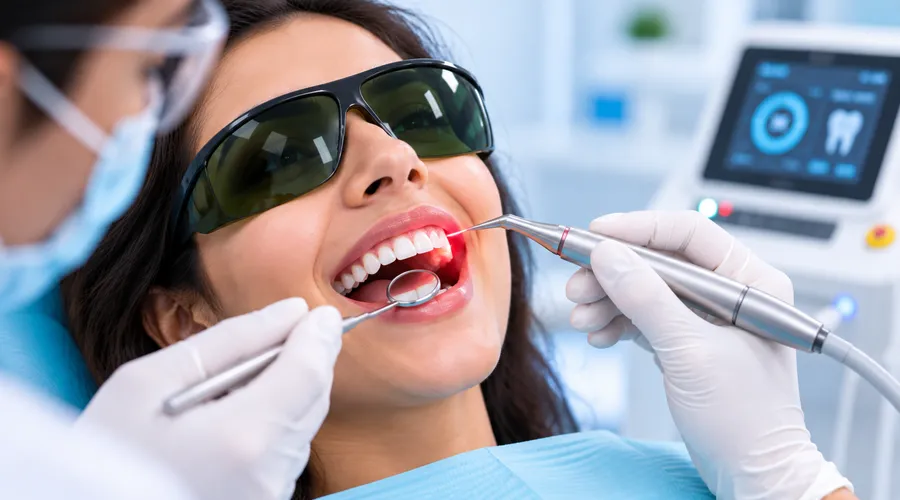
A laser may be one tool within a wider treatment plan. Conventional instruments or surgery may still be needed. Your dentist will explain why a particular approach is appropriate.
What to expect
How treatment is planned
Confirm the diagnosis
Identify the tissue involved and discuss alternatives.
Prepare safely
Use suitable eye protection and anaesthesia when needed.
Treat and reassess
Carry out the procedure and arrange a healing review.
Recovery & ongoing care
- Follow cleaning and eating advice for the treated area.
- Report worsening pain, swelling or unexpected bleeding.
Timing & things to consider
Laser treatment does not guarantee painless care, faster healing or freedom from stitches. Suitability and risks depend on the device and procedure; tissue damage is possible if used incorrectly.
Planning your treatment cost
The fee depends on the findings, treatment complexity, materials and number of visits. At your consultation, ask for the proposed stages, alternatives and an itemised estimate before deciding.
Common questions
Frequently asked questions
Does a laser replace all dental treatment?
No. It is an option for selected procedures, not a replacement for every instrument.
Will I need anaesthesia?
Anaesthesia may be needed; this depends on the procedure and your comfort.
Patient information references
- Australian Dental Association: Laser safety
- American Academy of Periodontology: Non-surgical treatments
General patient information; your dentist will explain the advice relevant to your treatment.