
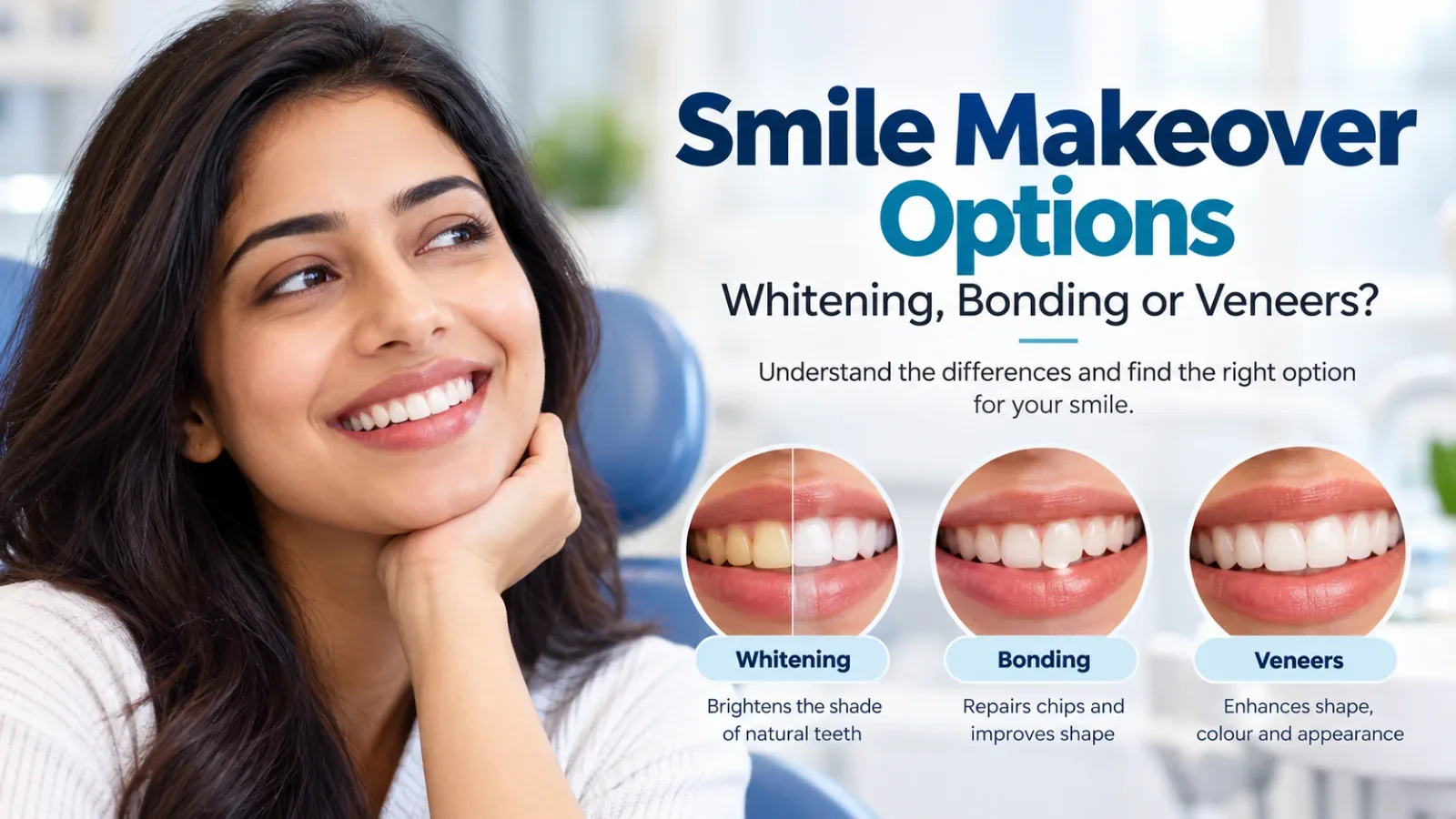
Compare whitening, bonding and veneers for a smile makeover. Understand tooth preparation, maintenance and questions for your consultation in Gunjur.
A smile makeover is a planning conversation rather than one standard procedure. One person wants a lighter shade, another wants to repair a chipped edge and someone else is concerned about the position of the teeth. Whitening, bonding and veneers address different aspects of appearance and have different maintenance needs. At BlueNile Dental in Gunjur, Bengaluru, an assessment can help connect your goals with suitable options. This guide explains how to compare common choices while considering tooth preservation, costs and the long-term responsibility of looking after any treatment you choose.
Define what you want to change
Start with specific concerns rather than requesting a complete transformation. Is the issue colour, a small chip, spacing, tooth shape or several things together? Point to the area in a mirror or bring photographs that help communicate your preference. Avoid treating another person's smile as an exact target, because tooth proportions, gums and facial features differ. Ask the dentist to explain what is realistic and which changes would require more treatment. A clear goal makes it easier to compare options and may reveal that a smaller intervention meets your needs without altering every visible tooth.
Health and function guide the sequence
Before cosmetic care, the dentist should assess decay, gum health, the bite and existing restorations. Problems that affect health or function may need attention first. Tell the clinician about pain, bleeding, sensitivity, grinding and previous breakages. A cosmetic result is easier to plan when the underlying condition is understood. Ask which parts of the proposed plan are necessary treatment and which are elective changes. This distinction helps you set priorities and budget. It also prevents a focus on appearance from obscuring a tooth or gum problem that needs its own diagnosis and treatment pathway.
Whitening changes colour rather than shape
Whitening may be relevant when your main concern is the shade of natural teeth. It does not straighten teeth or repair a broken edge. Crowns, veneers and fillings do not lighten in the same way as natural teeth, so existing dental work affects planning. Ask about suitability, likely limits and sensitivity before choosing a method. If bonding or veneers are also being considered, discuss the sequence and colour selection. A brighter shade is not automatically a better result; your preference and the relationship to neighbouring teeth matter. The dentist should explain the range of improvement rather than promise a specific shade from a photograph.
Bonding can address selected shape concerns
Tooth-coloured composite bonding may be considered for certain chips, small shape changes or other limited defects. Its suitability depends on the tooth, the bite and the goal. Ask how much preparation is needed, where material would be added and what maintenance is likely. Bonding may need polishing, repair or replacement over time, and it is not suitable for every proposed change. If you grind your teeth or repeatedly break restorations, discuss that history. The useful comparison is the clinical fit for your concern, not a general claim that bonding is always the simplest, cheapest or most conservative solution regardless of the situation.
Veneers involve a different commitment
Veneers cover the front surface of a tooth and can be used to address selected appearance concerns. Depending on the design and clinical situation, tooth preparation may be required and can be irreversible. Ask exactly what would be removed, why it is needed and whether less invasive alternatives are suitable. Discuss the effect on future maintenance and possible replacement. A veneer plan should include the health of the tooth and gums, the bite and your expectations. Do not assume a no-preparation label makes a procedure appropriate for every tooth or removes the need for assessment and informed consent.
Orthodontics or other options may be relevant
If your main concern is tooth position, ask whether orthodontic treatment is an option before covering or reshaping teeth. Whitening and veneers do not move the roots into a new position. In other situations, repairing an existing restoration or treating the gums may change the appearance enough to meet your goal. Crowns have a different role from veneers and should be discussed in relation to the tooth's structural needs. A good comparison includes the reasonable alternatives and the option of making no elective change. You should understand why a particular approach is being recommended rather than assume every smile makeover needs the same combination.
Preview tools help communication
Photographs, scans, mock-ups or digital planning may help you discuss shape and appearance, depending on the proposed treatment. Ask what the preview represents and what limitations it has. It is a communication and planning tool, not a guarantee that the final result will reproduce every detail. If a temporary stage or mock-up is available, ask how feedback will be used. Explain concerns before the final restoration is completed. The aim is shared understanding of the intended change, including the practical constraints of your teeth, gums and bite, rather than a decision based only on a visually impressive simulation.
Compare the complete cost and maintenance
Request a written plan showing the proposed procedures, the number of teeth involved and the sequence. Ask about assessment, records, temporary stages, laboratory work and reviews where relevant. Include possible future polishing, repairs or replacement in the discussion. A per-tooth price does not necessarily describe the complete treatment. If your budget is limited, ask whether a smaller, clinically appropriate change could meet your main goal. Avoid adding procedures simply to match a package. The best financial comparison is between plans that address the same concern, with their limitations and upkeep clearly explained before you choose.
Plan timing without rushing consent
If the goal relates to a wedding, reunion or photographs, mention the date at the first consultation. Allow time for diagnosis, any necessary dental care, planning and review. Some options need a longer course than others, and the timetable should reflect your mouth rather than an event deadline alone. Ask which stages can be predicted and what might change. Do not accept an irreversible procedure simply because a short-term offer creates pressure. You should have enough information to understand the treatment, alternatives and likely responsibilities afterwards. A useful plan remains understandable when the excitement of the initial cosmetic idea has settled.
Discuss your smile goals in Gunjur
Read our smile makeover and veneer information, teeth whitening guide and orthodontic options. Use the contact page to arrange a consultation at BlueNile Dental in Gunjur, Bengaluru. Bring your main concerns, existing treatment records and a realistic budget. Ask for a comparison that explains what each option changes, what it leaves unchanged and how it will be maintained. The aim is an informed choice that fits your teeth and priorities.
Further reading
ADA: veneers, ADA: ways to improve your smile and NHS: teeth whitening.