
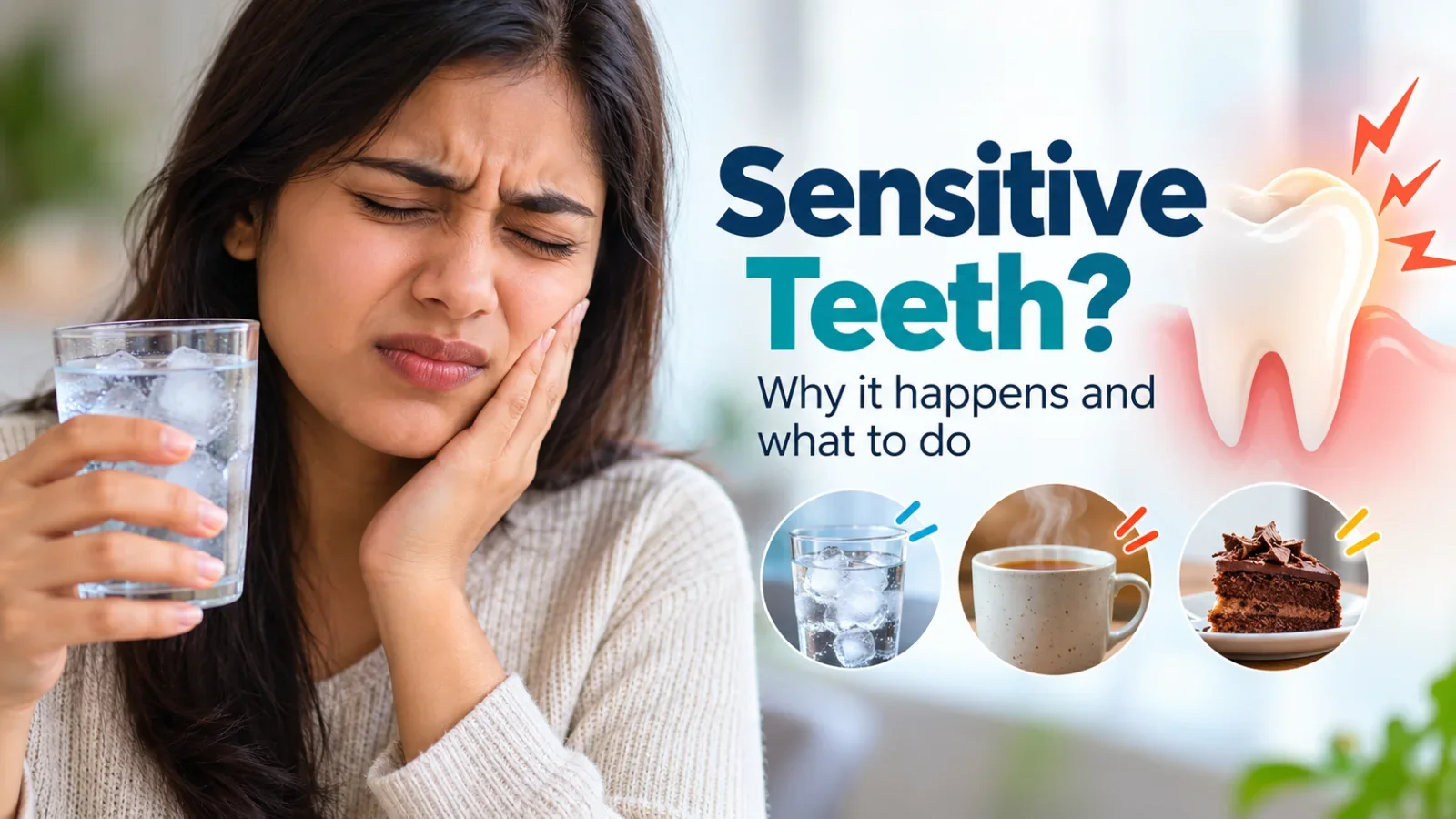
Understand common reasons for sensitive teeth, how to describe your symptoms and when a dental examination is needed to identify the cause.
A sharp reaction to cold water, hot tea or a sweet snack can make eating less enjoyable. Sensitive teeth have several possible explanations, and the right response depends on the cause. A brief twinge across several teeth is not the same pattern as lingering pain in one tooth or discomfort when biting. At BlueNile Dental in Gunjur, Bengaluru, an examination can help distinguish these situations. This guide explains what to observe, how to describe the symptoms and which questions help you understand a treatment recommendation.
What does sensitivity feel like?
People use the word sensitivity for different experiences. You might mean a quick sharp sensation that stops when the trigger disappears, a dull ache afterwards or pain that keeps returning without a trigger. Tell the dentist which description fits best. Note whether it affects one tooth, several teeth or a particular side of the mouth. The timing and pattern help guide assessment, but they cannot establish a diagnosis on their own. Avoid repeatedly testing a painful tooth with very hot or cold foods. A simple account of ordinary meals is enough to provide useful information without increasing your discomfort.
Exposed surfaces are one possibility
The inner part of the tooth is normally protected by outer tissues. Worn enamel or exposed root surfaces can contribute to sensitivity. Gum recession may make root areas more vulnerable to triggers. Brushing force, acidic exposures and other factors may be relevant, but several causes can overlap. Ask the dentist to show which surfaces are affected and explain the likely contributors. A diagnosis should identify the pattern in your mouth rather than assume all sensitivity comes from one habit. Understanding the location helps you apply any recommended technique or product to the areas that actually need attention.
Decay, cracks and restorations also matter
Cavities, a cracked tooth or a damaged filling can produce symptoms that people call sensitivity. A tooth that hurts on biting or has persistent discomfort deserves assessment rather than repeated changes of toothpaste. Mention recent dental treatment and whether symptoms began before or after it. The dentist can check the restoration, the bite and other possible explanations. Do not assume a tooth needs a root canal merely because it reacts to cold, and do not assume a toothpaste will address every problem. The appropriate treatment follows the examination findings and the behaviour of the symptoms over time.
Make a short symptom diary
For a few ordinary days, note the trigger, the location and how long the sensation seems to last. Include whether it is getting better, staying the same or worsening. Record any recent whitening, new toothpaste, change in brushing or injury. Bring the product labels if you are unsure what they contain. A diary is particularly useful when symptoms are intermittent and difficult to reproduce during a consultation. It need not be elaborate or measured to the second. The aim is to identify a useful pattern and avoid relying on a vague memory of several different episodes.
How the dentist may investigate
The assessment can include examining exposed surfaces, restorations and gums, checking the bite and using appropriate tests. Imaging may be recommended when it will help answer a specific question. Ask what the findings show and whether there is a clear cause or a need for review. If a product trial is suggested, ask how long to use it and what change would count as improvement. If treatment is proposed, ask which symptom or defect it addresses. An understandable plan links the evidence to the recommendation instead of treating sensitivity as a single condition with one universal solution.
What desensitising toothpaste can and cannot do
A dentist may recommend a suitable sensitivity toothpaste when it fits the diagnosis. Different products use different ingredients and need to be used according to their instructions. Ask which product or ingredient is appropriate and how it fits with fluoride protection. Do not expect every episode of discomfort to disappear after one brushing. Equally, do not keep trying new products indefinitely if symptoms persist or worsen. A toothpaste cannot repair every cavity, crack or defective restoration. Agree on when to reassess so a reasonable home-care measure does not become a reason to postpone investigation of a continuing dental problem.
Review brushing and everyday exposures
Ask the dental team to demonstrate a gentle technique and suitable brush pressure. Scrubbing harder is not a reliable way to make teeth healthier. Discuss acidic drinks, frequent sipping and any habits relevant to enamel wear. The advice should be realistic about your routine and overall nutrition. If reflux or another medical issue may be relevant, ask whether medical advice is needed as well. You do not need to remove every enjoyable food without a reason. Focus on the particular pattern the clinician identifies and choose changes that you can maintain consistently at home and at work.
Whitening and sensitivity need coordination
Tell the dentist if you are using whitening strips, gels, toothpastes or home remedies. Whitening can be associated with temporary sensitivity, but the presence of a whitening product does not prove it is the only cause. If symptoms develop during a supervised plan, follow the instructions for pausing and contacting the clinic. Avoid adding a second whitening product to accelerate the result. If cosmetic treatment is still being considered, discuss sensitivity before choosing a method. A plan that accounts for existing symptoms is more useful than attempting to manage discomfort only after treatment has begun.
When to arrange prompt care
Book an assessment for new, recurring or worsening sensitivity, particularly when one tooth is involved. Lingering pain, pain that wakes you, a visible break, swelling or difficulty chewing needs timely advice. Fever, rapidly increasing swelling or feeling unwell should be mentioned when contacting the clinic. Difficulty breathing or swallowing requires emergency medical attention. These features are different from a brief occasional twinge and should not be managed only by switching toothpaste. Describe what has changed and how it affects eating or sleep so the team can help determine how promptly you need to be seen.
Discuss sensitive teeth in Gunjur
Bring a short symptom history and details of products you use. Read our preventive dentistry information, filling and restorative options and gum care guide. Use the contact page to arrange an examination at BlueNile Dental in Gunjur, Bengaluru. Ask for a clear explanation of the likely cause, the proposed first step and the review plan. The aim is to make eating comfortable while addressing the reason for the symptoms.
Further reading
ADA: sensitive teeth and Oral Health Foundation: tooth sensitivity.