
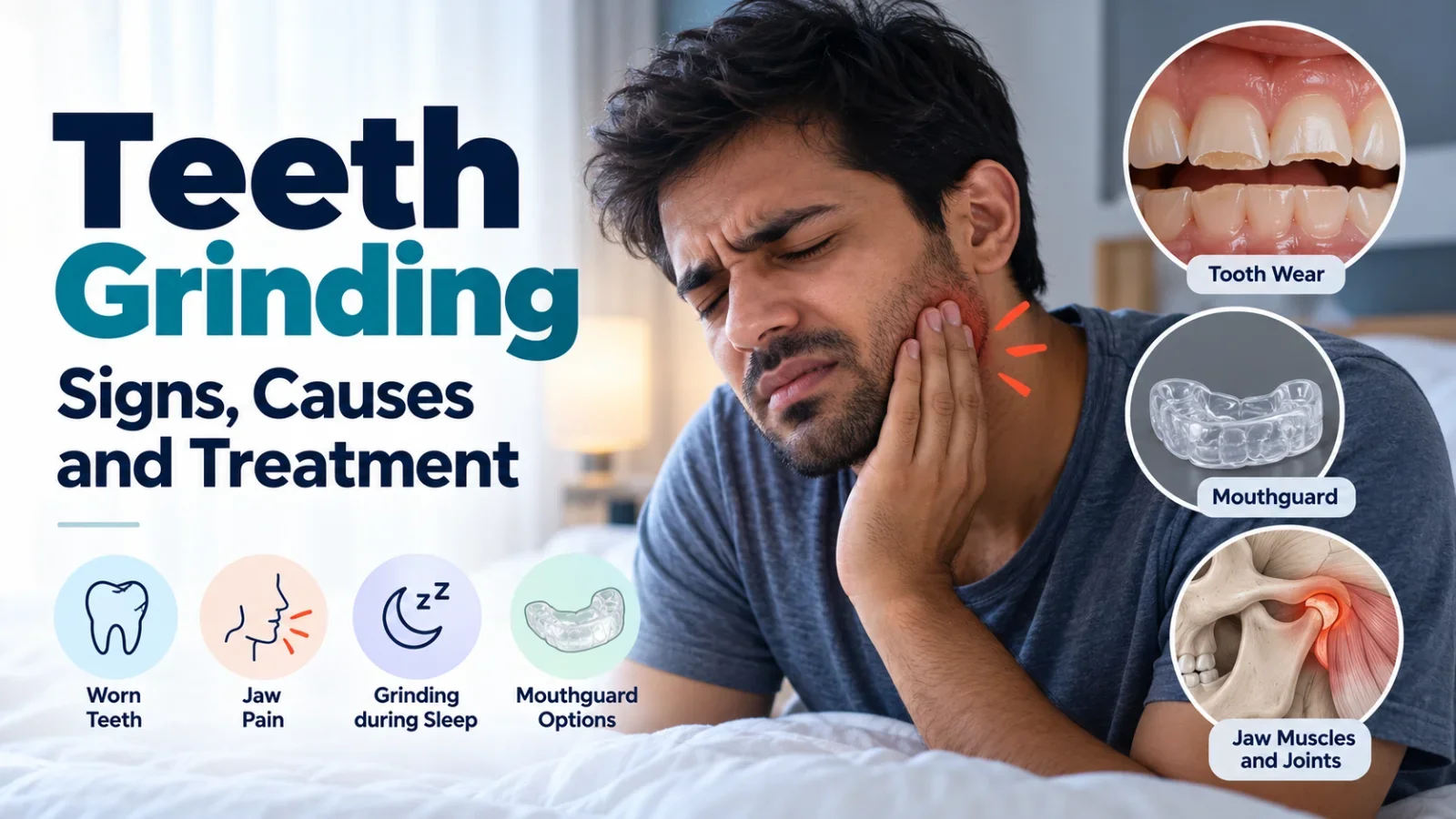
Explore signs of teeth grinding, reasons jaw pain needs assessment and questions about mouthguards, daily habits and conservative treatment options.
Waking with a tired jaw or noticing worn tooth edges can raise questions about teeth grinding. Bruxism describes grinding or clenching that can occur while awake or asleep. It is one possible part of a jaw pain assessment, but it is not an explanation for every headache, click or facial symptom. At BlueNile Dental in Gunjur, Bengaluru, an examination can help assess the teeth, muscles and relevant history. This guide explains what to notice, what mouthguards can and cannot do and why conservative, individual planning matters when discussing jaw symptoms.
Signs that may prompt a conversation
Possible clues include jaw muscle soreness, teeth that look worn or chipped, sensitivity and a partner noticing grinding sounds during sleep. You might also become aware of clenching while concentrating or working. None of these observations alone proves the cause of pain. Tell the dentist what you notice and when it happens. If a restoration keeps breaking, include that history. A useful assessment considers the pattern across symptoms, the condition of the teeth and possible contributing factors, rather than diagnosing grinding from a single photograph or assuming every worn edge reflects an active problem now.
Awake clenching and sleep grinding differ
You may catch yourself holding the teeth together during the day, while sleep-related activity is often noticed indirectly. Describe both without assuming they have identical triggers or management. A brief diary can record jaw tension during work, the time symptoms are strongest and any comments from a bed partner. Avoid repeatedly clenching to test the muscles, which can make them more uncomfortable. The clinician can help you decide which observations are relevant. The aim is to identify a useful pattern and choose reasonable first steps, not to monitor every jaw movement throughout the day or become preoccupied with normal activity.
Jaw pain has other possible explanations
Problems affecting the jaw joints and chewing muscles are often discussed under temporomandibular disorders. Dental pain, injuries and other medical conditions can also need consideration. Ask what the examination suggests and whether another assessment is appropriate. A painless click is not automatically a reason for major treatment. The National Institute of Dental and Craniofacial Research advises caution with irreversible approaches for these disorders and generally supports starting with simpler measures. The recommendation should match your diagnosis and the quality of evidence, rather than assume that changing the bite will resolve every pain or joint sound.
When symptoms need prompt help
Seek urgent medical help for jaw discomfort with chest pain, breathlessness, sweating or other symptoms suggesting a medical emergency. Significant trauma, facial swelling, fever, difficulty swallowing or a jaw that is stuck also requires prompt professional advice. New severe symptoms deserve assessment rather than being labelled grinding online. For ongoing soreness or damage without emergency features, arrange a dental appointment and explain how eating, sleep or opening the mouth is affected. Clearly describing function helps the team understand the problem. If symptoms change while you wait, contact the clinic again rather than assuming the original urgency assessment still applies.
What a dental assessment may involve
The dentist may examine tooth wear, restorations, the bite, jaw movement and areas of muscle tenderness. The history includes medicines, stress, sleep and previous treatment. Imaging or referral may be considered if it is needed to answer a particular question. Ask what findings are definite, what remains uncertain and how progress will be reviewed. Not every person with tooth wear needs the same appliance or a large restorative plan. The clinician should explain which issue is being addressed: protecting teeth, managing muscle symptoms, investigating joint problems or coordinating care with another professional when the history suggests it.
What a mouthguard can do
A professionally assessed appliance may be recommended to help protect teeth from grinding-related damage. The design, fit and review arrangements matter. A guard is not a guaranteed cure for grinding or every type of jaw pain. Ask what outcome the dentist expects and how you should use and clean it. Report discomfort, bite changes or difficulty tolerating it rather than modifying it yourself. If you already have a shop-bought guard, bring it to the assessment. The discussion should consider your actual symptoms and appliance, not simply assume that every device labelled a night guard serves the same clinical purpose.
Daily habits and conservative measures
Depending on the diagnosis, advice may include reducing habits that overload the jaw, such as prolonged gum chewing or repeated clenching. If you clench while concentrating, a gentle reminder to relax the jaw may help awareness. Ask the clinician what resting position or exercises are appropriate rather than following forceful routines online. Specific exercises should match the problem. Temporary changes to food texture or other comfort measures may be suggested. The aim is a manageable plan with review, not a permanent list of restrictions. If stress is affecting daily life, broader support may be useful alongside dental care rather than expecting the teeth alone to explain everything.
Discuss sleep and medical history
Tell the dentist about snoring, breathing pauses reported by a partner, significant daytime sleepiness and any relevant diagnoses. These symptoms may warrant medical assessment; a dental guard should not be assumed to treat a breathing disorder. Bring a current medicine list and mention when symptoms began relative to changes in health or treatment. Do not stop medicines on your own because you suspect a connection. If coordination with a doctor is recommended, ask what information to share and what the dental findings were. Clear communication avoids treating different concerns as if they were one condition with one simple solution.
Be cautious with irreversible treatment promises
If a proposed solution involves permanently altering teeth, a major bite change or surgery, ask for a clear diagnosis, the supporting evidence and alternatives. A second opinion can be useful before an irreversible decision. Existing damage may still need repair, but that is a separate question from whether a procedure treats the cause of jaw pain. Ask how success will be judged and what happens if symptoms persist. A stepwise plan allows response to simpler measures to be assessed. It also helps you understand the purpose of each intervention instead of committing to several procedures under a broad promise of fixing the bite.
Arrange a jaw symptom assessment in Gunjur
Read our TMJ, bruxism and jaw pain information and restorative dentistry guide. Use the contact page to arrange a consultation at BlueNile Dental in Gunjur, Bengaluru. Bring a symptom diary, any existing appliance and your medicine list. The aim is to identify relevant findings and agree on a conservative, understandable plan, including referral when needed and a clear point for reviewing progress.