
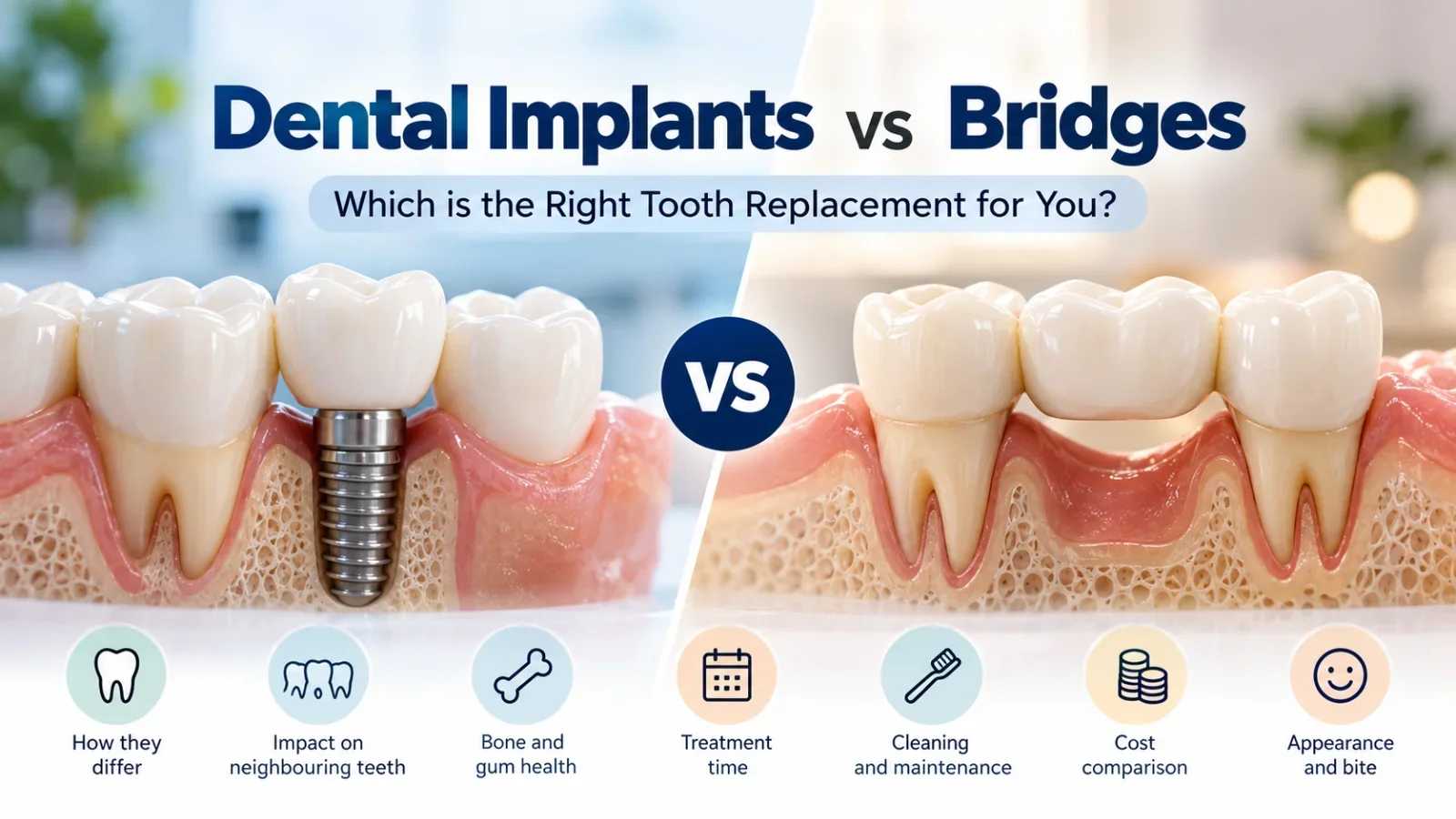
Compare dental implants and bridges, including treatment stages, neighbouring teeth, cleaning, costs and questions for your dental consultation.
A missing tooth can make everyday choices feel surprisingly complicated. You may be weighing dental implants against bridges while thinking about appearance, chewing, treatment time and cost. Both can replace teeth, but they work differently and suit different circumstances. Choosing well begins with the condition of the whole area, including the neighbouring teeth and gums. At BlueNile Dental in Gunjur, Bengaluru, a consultation can help connect those findings with your priorities. This guide gives you a framework for that conversation without assuming one treatment is right for everyone.
How an implant and a bridge differ
An implant is placed in the jaw to support a replacement tooth or other restoration. For a single missing tooth, the visible crown is connected to the implant through an attachment called an abutment. A conventional bridge replaces the missing tooth by linking it to support from adjacent teeth, which are usually prepared for crowns. Other bridge designs may be possible in selected cases. Ask the dentist to draw the proposed design or show a model. Seeing which structures provide support is often more helpful than comparing the treatment names alone.
Start with the neighbouring teeth
The teeth beside the gap can change the balance of the discussion. If they are healthy and largely untouched, ask how each option would affect them. If they already have substantial restorations or need crowns, the comparison may be different. A bridge depends on the suitability of its supporting teeth; an implant depends on the condition of the implant site and the wider mouth. Request an explanation for each adjacent tooth rather than treating the gap as an isolated problem. The most appropriate plan considers what needs protecting as well as what needs replacing.
Bone, gum health and medical history
Implant assessment includes the available bone, the gum tissues and factors that may influence healing. The dentist may recommend imaging to plan the position and discuss whether additional procedures are needed. Bring information about diabetes, tobacco use, medicines and previous surgery. These details help shape the discussion; they do not automatically determine eligibility without assessment. Bridges also need healthy support and manageable cleaning access. If active gum disease is present, ask how it will be addressed before replacement treatment. A stable foundation matters whichever option you eventually choose for the missing tooth.
Compare the complete treatment journey
An implant plan may involve placement, healing and the later fitting of the replacement tooth. Some situations allow different timing, but immediate replacement should never be assumed from an advertisement. Bridge treatment usually follows its own sequence of preparation, records, temporary protection where needed and fitting. Ask how the gap will be managed during treatment, particularly if it is visible when you smile. Discuss travel, work commitments and the number of visits you can realistically attend. A treatment schedule should explain both active appointments and waiting periods, including what could alter the original timeline.
Think through everyday cleaning
Both options require ongoing care. With a bridge, you need a practical way to clean around the supporting teeth and beneath the replacement portion. With an implant, the gum margin and surrounding surfaces still need careful cleaning and professional review. Ask for a demonstration with the actual cleaning tools recommended for your design. Consider dexterity, eyesight and whether someone helps you with oral care. The question is not simply whether you can clean it on the day it is fitted, but whether you can maintain that routine comfortably over the years.
Compare costs over the same scope
An implant estimate may separate the fixture, surgery, abutment and crown. A bridge estimate may depend on how many units are involved and which materials are chosen. Ask about examinations, imaging, temporary replacements, possible grafting and review appointments. Avoid comparing an implant fixture price with a completed bridge price. Also discuss future maintenance and what may happen if a crown chips, a supporting tooth develops a problem or the restoration needs replacement. These are planning questions rather than predictions of failure. They help you understand the financial responsibilities associated with either choice.
Appearance, bite and expectations
Your smile line, the location of the gap and the shape of the gums influence what is achievable. Ask how the replacement will meet the gum, whether any visible space may remain and how the colour will be selected. For back teeth, access for cleaning and chewing forces deserve attention alongside appearance. Bring examples of what concerns you about your current smile, but treat photographs as a way to communicate preferences rather than a promise of a specific result. Discuss any grinding habit or previous breakages so those factors can be considered in the design.
Other options may belong in the discussion
Depending on the situation, a removable partial denture, an adhesive bridge or monitoring the space may also deserve consideration. Ask what each alternative would mean for comfort, maintenance and the other teeth. You should be able to explain why the recommended option suits your mouth before committing to it. If several teeth are missing, a plan for the full arch may be more useful than deciding on one gap at a time. The goal is a coherent replacement strategy that reflects your health, your preferences and what you can maintain.
Give yourself a clear comparison
After the consultation, write down the main benefit, limitation and maintenance requirement of each suitable option. If you cannot explain one of them, ask another question before deciding. You should leave with enough information to connect the recommendation to your mouth, rather than choosing solely on the basis of a treatment name.
Prepare for a tooth replacement consultation
Write down which matters most to you: avoiding surgery, protecting neighbouring teeth, limiting treatment time, managing cost or improving a visible gap. Bring any previous X-rays and a current medicine list. Ask for a written comparison of the clinically suitable options, including the sequence, limitations and likely maintenance. Read our dental implant information, crowns and bridges information and denture options before visiting. To discuss dental implants versus bridges in Gunjur, use our contact page to arrange an individual assessment at BlueNile Dental.
Further reading
American Dental Association: dental implants and NHS: dental treatment options.