
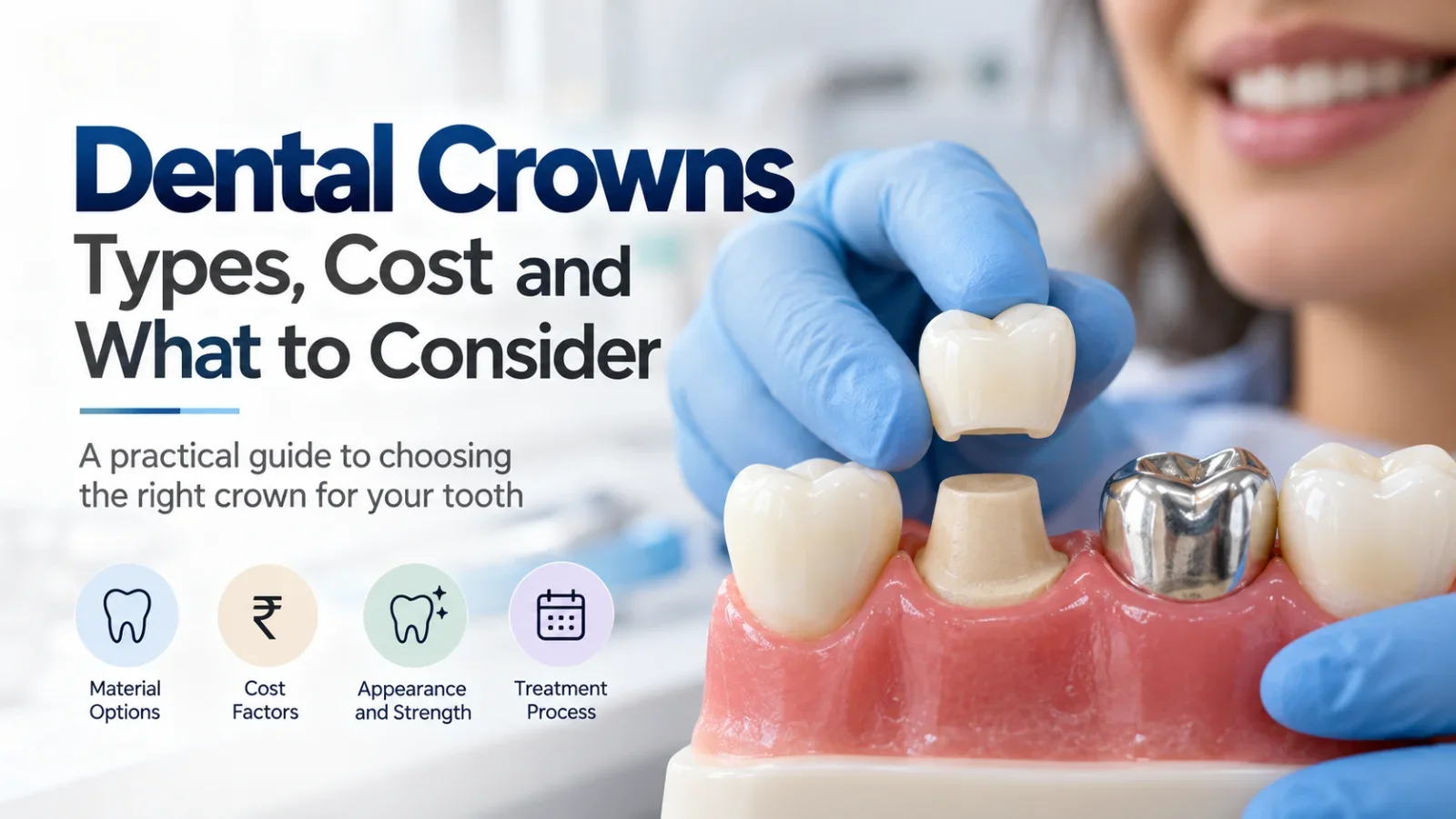
Compare dental crown materials, understand what affects the price and learn which questions help you discuss tooth protection, appearance and upkeep.
If a dentist recommends a crown, you may immediately hear several material names and several different prices. It can be difficult to know which differences matter for your tooth. A crown is a restoration that covers and protects a prepared tooth, but the design and material need to match the clinical situation. This guide explains how to discuss dental crown types and costs at BlueNile Dental in Gunjur, Bengaluru. It focuses on practical questions about the tooth, appearance, cleaning and maintenance rather than assuming the most expensive material is always the right choice.
Why might a crown be recommended?
A crown may be considered when a tooth needs more protection or restoration than a direct filling can reasonably provide. Examples can include substantial damage, a large existing restoration or a tooth following root canal treatment, depending on the remaining structure. Ask why a crown is recommended for your tooth and what alternatives are clinically suitable. An onlay or another restoration may be relevant in some situations. The purpose should be explained before discussing materials. A crown is not simply a cosmetic upgrade, and a material comparison is incomplete without understanding the condition of the tooth underneath it.
Common material categories
Crowns can be made from metal, porcelain bonded to metal or different ceramic materials, including zirconia-based options. These broad categories have variations, so the name alone does not tell the whole story. Ask which exact option is proposed and why it suits the position of your tooth. Appearance, available space, biting forces, the supporting tooth and the restoration design all matter. Avoid relying on a simple ranking of strongest or most natural. The useful question is how the material and design will perform for your particular needs, including any relevant limitations the dentist wants you to understand.
Front teeth and back teeth raise different questions
For a visible front tooth, colour, translucency and the relationship to the gum can be important. For a back tooth, chewing demands and available space may shape the discussion. Neither area is only about appearance or only about strength. Ask how the crown will be matched to neighbouring teeth and how the bite will be checked. If you have photographs of the tooth before damage, they may help communicate preferences. Tell the dentist about grinding, previous crown breakages or a bite that feels uneven. These details can influence planning and the advice about protecting the finished restoration.
The tooth beneath the crown matters
A crown needs a suitable foundation. The dentist may need to assess decay, cracks, gum health and the amount of remaining structure before finalising the plan. Sometimes additional restorative work is needed first. Ask whether the tooth needs a build-up and why, and whether any further treatment is conditional on what is found during preparation. A crown cannot make every damaged tooth predictable. Understanding the tooth's outlook helps you judge the investment and compare alternatives. The discussion should include the supporting tissues and the maintenance plan, rather than focusing entirely on the laboratory material used for the visible restoration.
What happens during the treatment stages?
Treatment usually involves preparing the tooth, recording its shape and bite, and arranging the final restoration according to the method being used. A temporary crown may be provided when needed. Ask how many appointments are anticipated and what to do if the temporary restoration loosens. At the fitting stage, the dentist checks aspects such as fit, contacts and bite before completing the procedure. Ask what sensations are expected afterwards and when to report a concern. The sequence can vary, so do not assume that another person's same-day or multi-visit experience describes your own planned treatment.
What affects the cost of a crown?
The estimate can reflect the material, laboratory work, complexity of the design and any treatment needed to prepare the tooth. A visible tooth with demanding shade matching may require a different process from another restoration. Ask whether the fee includes the temporary crown, scans or impressions, fitting and review. Clarify whether consultation, imaging, a build-up or root canal treatment is separate. This makes comparisons more meaningful than a single crown price. Request a written estimate that identifies the proposed material and the associated stages, with an explanation of which items might change if further findings alter the plan.
Discuss appearance before final fitting
Tell the dentist which aspects matter to you, such as a natural shade, the shape of a front tooth or a visible metal edge on an old restoration. If whitening is being considered, discuss the sequence before a final shade is chosen. Crowns do not whiten like natural teeth. Ask what opportunities exist to review the appearance during the planned process and what limitations apply. A photograph or shade guide can support communication, but it should be considered in appropriate lighting and alongside the clinical findings. Clear expectations before completion help avoid surprises about the finished result.
Looking after a crowned tooth
A crown still needs brushing, between-teeth cleaning and dental review. The tooth and gum margin remain part of your mouth's ongoing care. Ask which cleaning tools suit the contacts and whether a grinding habit needs attention. Avoid using teeth to open packaging or bite hard objects. If a crown feels loose, a contact traps food or the bite feels different, contact the clinic. Do not attempt to glue it back with household adhesive. The most useful maintenance advice is specific to your restoration and routine, including the signs that should prompt a check before a minor issue becomes more complicated.
Understand longevity and repair questions
No crown material makes a restoration permanent in every situation. Service life depends on several factors, including the tooth, care, bite and events such as damage or decay. Ask what future problems are possible and how they would be assessed. A chipped surface, a loose crown and a problem inside the tooth do not necessarily have the same solution. If written guarantees are offered, ask what they cover and what care conditions apply. Planning for review and possible future treatment is more realistic than choosing a crown solely because of a promised number of years in an advertisement.
Discuss crown options in Gunjur
Explore our crowns and bridges information, restorative dentistry options and root canal treatment guide. Bring previous records and questions about appearance, cost and appointment timing. Use the contact page to arrange a consultation at BlueNile Dental in Gunjur, Bengaluru. The aim is a tooth-specific recommendation that explains why a crown is needed, which material is suitable and what the complete plan includes.
Further reading
NHS: crowns and other dental treatments and ADA: restorative and cosmetic options.