
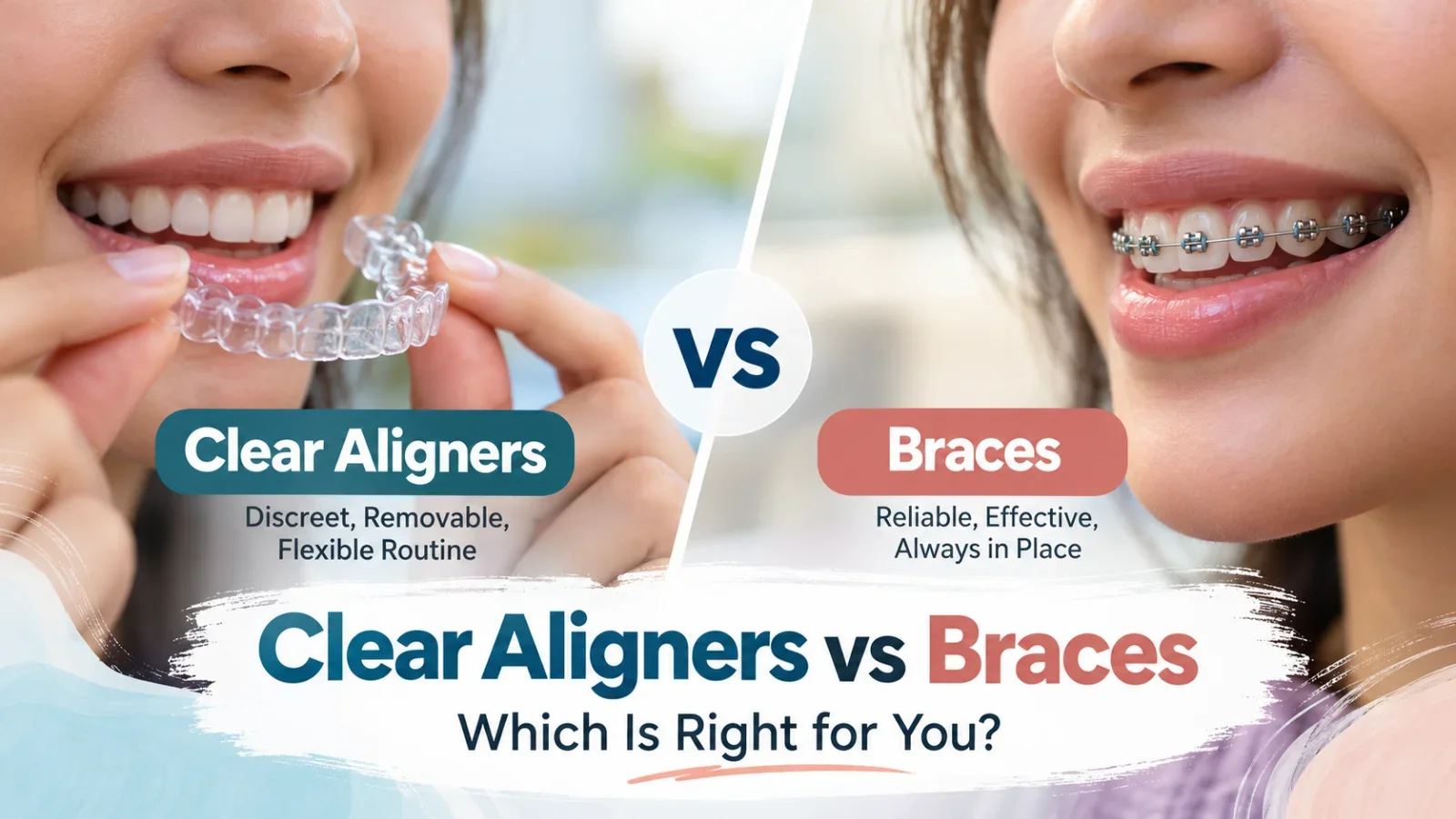
Explore clear aligners vs braces, from daily wear and cleaning to costs and suitability. Plan your orthodontic consultation in Gunjur, Bengaluru.
Clear aligners and braces both aim to move teeth, but their day-to-day demands are different. If you are comparing treatment in Gunjur, it is natural to ask which is more comfortable, less noticeable or easier to fit around work. The answer depends on your bite, gum health and habits as much as the appliance. A useful orthodontic consultation explains what needs correcting and why a particular method is suitable. This guide helps you compare clear aligners versus braces without reducing the decision to appearance or an advertised starting price.
Understand the movement being planned
Clear aligners use a sequence of removable trays designed around a treatment plan. Braces use brackets and wires attached to the teeth and adjusted during care. Neither description tells you how complicated your particular bite is. Ask whether the goal involves crowding, spacing, tooth rotation, bite correction or several issues together. Some movements may require additional features or a different approach. A digital preview can support discussion, but it is a plan rather than a guaranteed biological result. The dentist should explain how progress will be checked and what adjustments may become necessary.
Suitability comes before appliance preference
Before deciding on aligners or braces, the clinician needs to assess your teeth, gums and bite. Existing decay, gum inflammation or other dental problems may need attention first. Records can include photographs, scans or impressions and appropriate X-rays. Share any history of gum treatment, dental trauma or previous orthodontics. If you have crowns, bridges or implants, ask how they affect the plan. An in-person examination is especially valuable when an online offer seems simple. The appliance should follow a diagnosis and a supervised treatment strategy, with opportunities to examine the mouth during treatment.
Consider your daily routine honestly
Aligners need consistent wear according to the clinician's instructions. They are usually removed for meals and for drinks other than plain water, then cleaned and put back in as advised. Think about long meetings, frequent snacking, school lunches and travel. Braces remain in place, so remembering to reinsert them is not part of the routine. However, food choices and cleaning around brackets require attention. Neither system is maintenance free. Choose based on habits you can sustain on ordinary busy days, not just what feels manageable during the first enthusiastic week of treatment.
Compare visibility with realistic expectations
Aligners are transparent, but treatment is not necessarily invisible. Small tooth-coloured attachments, elastics or other features may be required. Braces vary in appearance, and some designs are less conspicuous than others. Ask which parts of your own proposed appliance would be visible while speaking or smiling. If you have a wedding, presentation or other event coming up, discuss it before committing to a timeline. Avoid planning around an assumption that trays can simply be left out whenever convenient. Treatment choices and wear instructions need to support the clinical plan as well as your social preferences.
Comfort, speech and adjustments
Both methods can cause temporary pressure or tenderness as teeth move. Aligners may initially affect how certain sounds feel, while brackets can irritate the lips or cheeks. Experiences vary, and a promise of completely painless treatment would be misleading. Ask what level of discomfort is expected, what practical measures are recommended and when to contact the clinic. Also ask how to report a loose bracket, lost tray or appliance that no longer fits properly. Clear instructions for these interruptions matter more than a broad statement that one appliance is always more comfortable than the other.
Cleaning and dental health during treatment
Plan for brushing and cleaning between the teeth throughout orthodontic care. With braces, ask for a demonstration around brackets and wires. With aligners, ask how to clean the trays and what to do after eating away from home. Wearing trays over unclean teeth or repeatedly sipping sugary drinks creates avoidable difficulties. Carrying a small care kit may help if you spend long hours outside the house. Continue the dental reviews recommended for your individual risk. Orthodontic appointments monitor tooth movement, while general dental assessment remains important for the health of teeth and gums.
Compare complete costs and follow-up
A useful cost comparison includes assessment, records, appliance fitting, scheduled adjustments, any planned refinements and retainers. Ask which items are included and how replacements or unplanned visits are charged. Treatment length depends on the movements needed and how progress develops. A shorter advertised timeline may relate to a different problem from yours. If you may relocate from Bengaluru, discuss continuity of care before starting. Ask who supervises treatment, how reviews are arranged and what information you would receive if care needed transferring. These details help you compare the overall service rather than the appliance alone.
Retainers are part of the decision
After active movement, retainers help maintain tooth position. They may be removable, fixed or used in combination, according to the plan. Ask when you will receive them, how to clean them and what to do if one breaks or becomes tight. Include replacement costs and review arrangements in your budget. Choosing aligners because they are removable does not mean retention can be ignored afterwards. Equally, finishing braces does not mean teeth will remain in their new positions without ongoing instructions. Discuss long-term commitment at the beginning so the final stage does not come as a surprise.
Decide how progress will be communicated
Ask what you will be shown at reviews and how to raise concerns between appointments. If a tray stops fitting or a wire irritates the mouth, knowing the contact process avoids uncertainty. Keep your instructions and appointment details accessible, particularly when another family member helps organise visits or you spend time away from Bengaluru.
Your next step in Gunjur
Prepare questions about your main concern, your routine and the result you hope to achieve. Ask the clinician to explain which options are clinically suitable and what each would require from you. You can explore our clear aligner and orthodontic services and preventive dental care before your visit. Use the BlueNile Dental contact page to arrange an orthodontic consultation in Gunjur, Bengaluru. The most useful outcome is a clear plan you understand, including its limits, responsibilities and review schedule.
Further reading
US Food and Drug Administration: clear dental aligners. Device regulation varies by country; this link provides general patient information.