
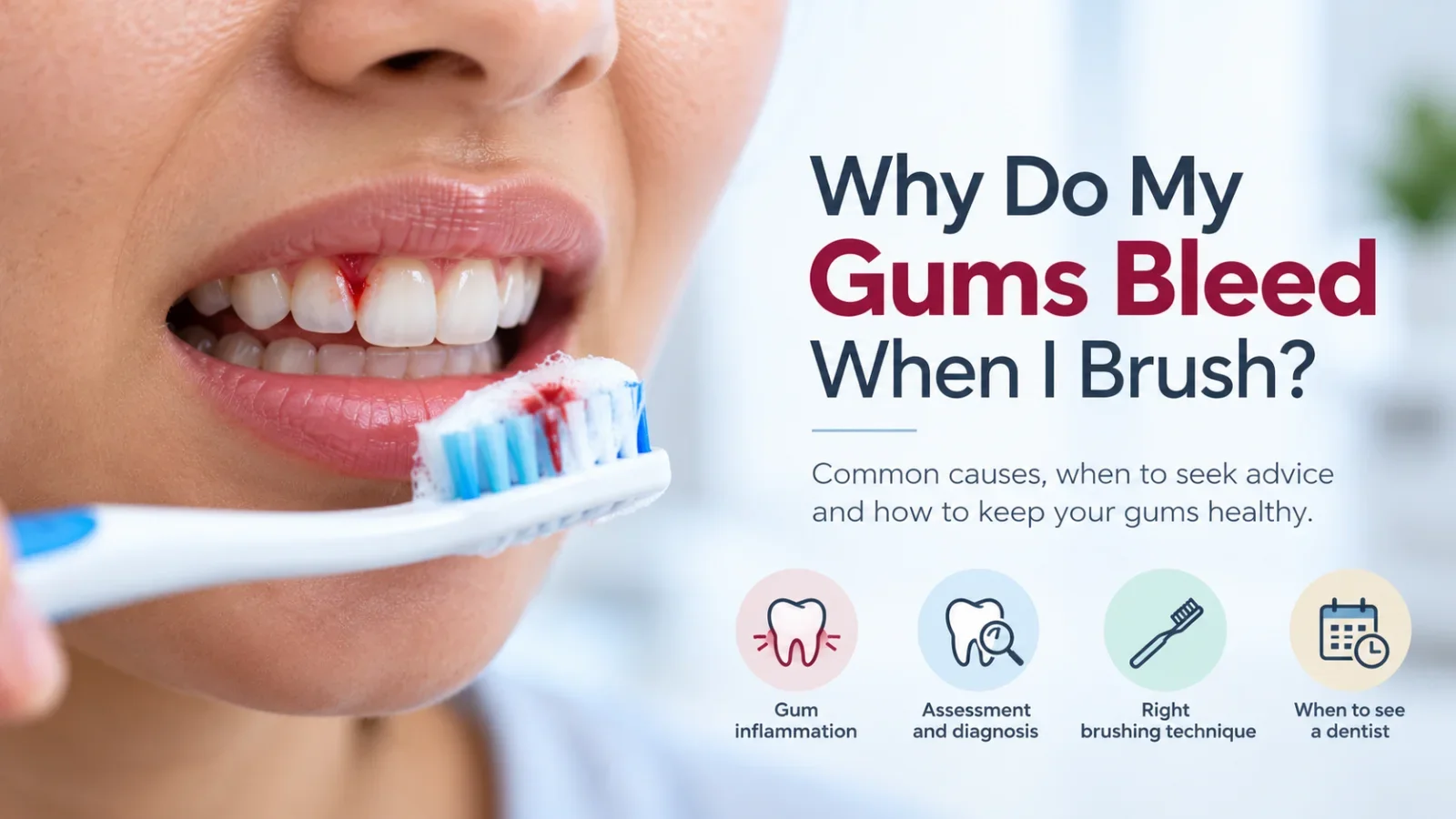
Learn why gums may bleed when brushing, what to tell your dentist and how a gum assessment can guide care at BlueNile Dental in Gunjur.
Seeing blood when you brush can be unsettling, especially when the gums do not hurt. Bleeding is a reason to review your oral care and arrange an assessment if it persists or keeps returning. It is not possible to identify the cause from the colour of your toothpaste foam alone. At BlueNile Dental in Gunjur, Bengaluru, a gum assessment can help establish what is happening and what care is appropriate. This guide explains what to notice, what questions to ask and how to prepare for that conversation.
Why gums may bleed
Plaque accumulating around the gum margin is a common reason for gum inflammation and bleeding. Cleaning technique can also play a part, especially if a brush is used forcefully or floss is snapped into the tissue. Other factors, including pregnancy-related changes and certain medicines, may influence bleeding. Several things can occur together. Do not assume that bleeding is simply due to brushing too hard, and do not stop a prescribed medicine on your own. Tell the dentist when you first noticed the change and whether it affects one area or several places around the mouth.
Gum inflammation and deeper disease
Gingivitis describes inflammation of the gums. Periodontitis involves the supporting tissues around the teeth and needs a more detailed assessment and treatment plan. The amount of blood you see does not reliably tell you which condition is present. Some people notice a bad taste, persistent breath concerns, recession or teeth that feel different when biting; others notice little discomfort. Ask the dentist to explain the findings in plain language and show which areas need attention. An early conversation is helpful because appearance alone, including a photograph taken at home, cannot establish the condition of the underlying support.
What to record before your appointment
Keep a short record of when bleeding occurs: during brushing, between-teeth cleaning, meals or without touching the gums. Note whether you have changed your toothbrush, started a new medicine or noticed swelling. If there is a particular area you struggle to reach, mention it rather than trying to make your routine sound perfect. Bring your toothbrush or a photograph of the tools you use if that makes the discussion easier. Useful information includes smoking or tobacco use, diabetes history and previous gum treatment. These details help the clinician tailor the examination and the advice.
What a gum assessment may involve
The dentist can examine plaque and calculus deposits, check the gums and measure the spaces around the teeth where indicated. Imaging may be recommended if it will help assess supporting bone or another concern. Ask what the measurements mean and whether the findings suggest a local problem or a wider pattern. You can also ask how the dentist will compare the baseline with later reviews. Having a starting record makes improvement easier to discuss. A treatment recommendation should explain the diagnosis, the areas involved and what the proposed cleaning or other intervention is intended to achieve.
Should you stop brushing bleeding areas?
Avoiding the area altogether can make effective plaque control harder. Continue gentle cleaning with a soft brush while arranging advice, and ask the dental team to demonstrate suitable pressure and positioning. Cleaning between teeth also needs a technique and tool that fit the space. If floss repeatedly cuts the gum or an interdental brush feels forced, ask for guidance rather than pushing harder. A personalised demonstration can be more useful than buying several new products. Mouthwash may have a role in a particular plan, but it should not be treated as a substitute for removing plaque effectively.
Professional cleaning and ongoing care
The treatment recommended depends on the examination. Some people need oral hygiene support and professional cleaning; others need more involved periodontal treatment and closer maintenance. Ask which areas are being treated, whether more than one visit is anticipated and what temporary sensations you might notice afterwards. Discuss how to clean at home during healing. Do not judge the success of treatment only by how smooth the teeth feel immediately after an appointment. The plan should also include reassessment and a way to evaluate inflammation, cleaning access and any areas that continue to bleed despite your efforts.
Medicines and health factors deserve discussion
If you take a medicine that affects bleeding, tell the dentist before treatment. Bring the name and dose rather than relying on the tablet's colour. Do not stop blood-thinning medication unless the prescribing clinician and treating dental team give appropriate instructions. If you have diabetes, pregnancy-related concerns or a history of unusual bleeding, include that information. Sometimes the dentist may recommend medical advice alongside dental care. This is particularly relevant when bleeding is widespread or accompanied by symptoms elsewhere. A complete history allows dental and medical decisions to be coordinated without assuming every episode has the same cause.
When to get help promptly
Contact a dentist promptly for marked swelling, pus, severe pain, a loose adult tooth or bleeding that occurs spontaneously and persists. Uncontrolled bleeding, difficulty breathing or swallowing, or rapidly spreading facial swelling needs urgent medical attention. If you also have unexplained bruising, frequent nosebleeds or other unusual bleeding, seek medical advice. These signs need individual assessment rather than an online diagnosis. When contacting the clinic, describe both the gum symptoms and any general symptoms clearly. You do not need to wait for severe pain before asking for help with a recurring gum problem.
Check that the advice is workable
If a recommended cleaning aid is difficult to use, ask for a demonstration before leaving. Mention bridges, tight contacts or hand discomfort that makes the routine challenging. Practical adjustments can help you follow the plan more consistently and give the dentist useful information when the gums are reviewed at a later appointment.
Plan a practical routine in Gunjur
Before leaving your appointment, ask for two or three specific changes you can realistically maintain. Confirm which cleaning tools to use, which areas need extra attention and when the gums should be reviewed. If the recommended routine is difficult, say what gets in the way so it can be adjusted. Read our gum care and periodontics information and preventive dentistry guide for service details. Use the contact page to arrange a gum assessment at BlueNile Dental in Gunjur and receive advice based on your own findings.
Further reading
NHS: gum disease and American Academy of Periodontology: nonsurgical treatment.